Darkest Dungeon
Red Hook Studios' gothic party roguelike turns stress into a second health bar and turns your roster, not any one hero, into the thing you're actually raising from level one.
8.5 / 10
The Wanderer reading room
Idle RPGs, MMOs, browser games and mobile RPGs, taken apart properly. Every review carries a score out of 10, what the game does well, what it does badly, and the kind of player it is actually for.
Red Hook Studios' gothic party roguelike turns stress into a second health bar and turns your roster, not any one hero, into the thing you're actually raising from level one.
8.5 / 10
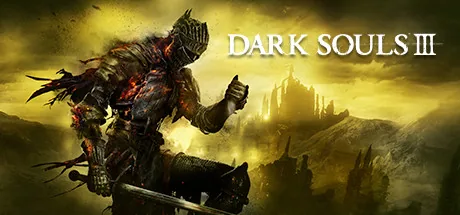
FromSoftware's fastest, most aggressive Souls game turns everything the trilogy built up to that point — punishing combat, colossal bosses, environmental storytelling — up to a final, deliberate intensity, and closes the series out as close to a masterpiece as it gets.
9.5 / 10
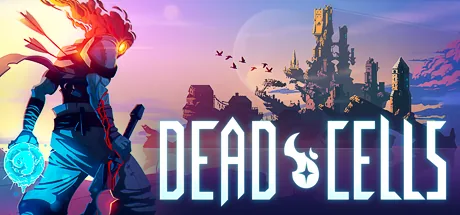
Motion Twin's roguelite metroidvania turned a simple pitch — permadeath runs through a procedurally reassembled castle — into one of the best-supported action games on Steam, and it mostly still holds up now that the studio behind its five years of updates has closed the book.
8.5 / 10
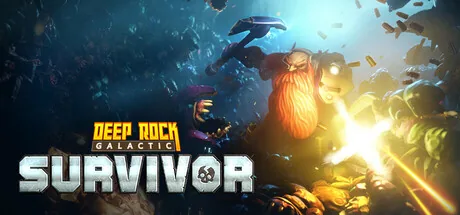
Funday Games bolts a real mining loop onto the Vampire Survivors formula, so every dive asks a second question underneath "which upgrade do I pick": is that vein of nitra worth the ten seconds it takes to dig out while the swarm closes in?
8 / 10
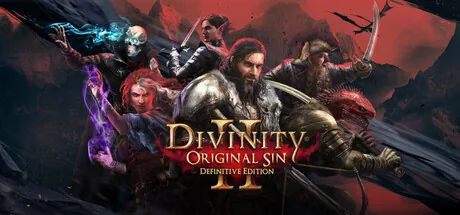
Nine years on, the game that taught Larian how to build Baldur's Gate 3 is still the sharper tactical puzzle of the two — a combat system built from fire, water and armour that rewards a party that thinks in physics, and a brutal opening act that punishes one that doesn't.
8.5 / 10
Klei's co-op survival sandbox turns Wilson's original nightmare into a shared one, where the real threat isn't the Deerclops so much as what happens when nobody on the team remembers it's coming. A decade of free content updates against 49 mostly-cosmetic DLC entries makes it a genuinely useful case study in how to monetise a survival game politely.
8.5 / 10
A decade-old mobile idle game about running a chicken farm into the stratosphere, held together by a prestige loop, an artifact-crafting layer, and — unusually for the genre — timed co-op contracts that only work if other people show up.
8 / 10
FromSoftware took the tight, authored corridors of the Souls formula and let them loose across an entire continent, trading hand-guided pacing for a world you're free to get lost, lost again, and overpowered in on your own terms.
9 / 10
A math-themed mobile incremental whose real product isn't the eight-chapter story but the JavaScript SDK sitting underneath it — a scripting layer that turns the community into an unofficial content team.
8 / 10
A game about ratios, throughput and the compulsion to make one number slightly bigger than it was five minutes ago, built with an engine precise enough to run that compulsion at a million entities without falling over. Ten years on, it is still the reference point every other automation game gets measured against.
9.5 / 10
The second act of the Remake trilogy trades Midgar's corridors for open regions, a deep Synergy-and-Folio combat system and a genuinely excellent card game — then buries a chunk of it under checklist busywork and a PC port that still stutters a year on.
8 / 10
A subscription MMORPG where one character can learn every job in the game, and where the story you're required to sit through before reaching the current patch has grown into a decade-plus commitment. Reviewed with Dawntrail current and patch 7.55 freshly out.
8.5 / 10
A decade-old action RPG that just got a real tenth mastery and a third of a new map, proving Crate Entertainment still has more to say — even if the engine underneath it never stopped being from 2016.
8.5 / 10
No subscription, no level-cap treadmill and, fourteen years on, still no level 81 — Guild Wars 2's horizontal progression is either the smartest bet the MMO genre ever made or a slow-burn excuse for six expansions of buy-in. Reviewed with Visions of Eternity live.
8.5 / 10
Supergiant welded a fully voiced, choice-reactive narrative onto the bones of a permadeath roguelite and made death itself the mechanism that moves the story forward — a look at why the original Hades still reads as close to a solved design problem five years and one full sequel later.
9 / 10
Chasing Carrots dressed a Vampire Survivors loop in Diablo's dark isometric skin and then buried it under one of the deepest meta-progression trees the survivor-like genre has — a review of what that unlock grind buys you, and what happens to the screen once it pays off.
8 / 10
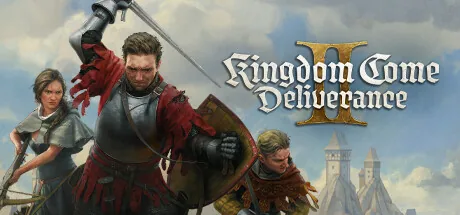
Warhorse Studios' medieval simulation grows up without losing its stubbornness — a sequel that fixes the first game's roughest edges while doubling down on the idea that realism should cost you something. The result is one of the most complete RPGs of the last few years, provided you're willing to let a swordfight or a bowl of stew go badly.
8.5 / 10
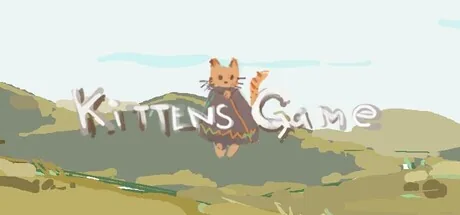
A free browser incremental that hides its difficulty in storage caps and the calendar rather than big numbers — you are never fighting an enemy in Kittens Game, you are fighting your own granary.
8 / 10
A brutal, hand-crafted top-down shooter that asks you to think in Hotline Miami's language of parries and one-hit deaths, then backs it with fifty-four stages that never repeat a trick twice.
8 / 10
The action RPG that turned build crafting into something you can actually read and steer — fifteen masteries, a specialization tree on every skill, and deterministic crafting — held back by a campaign nobody replays and an endgame that runs out of new ideas before you do.
8 / 10
A Belle Époque retelling of Pinocchio that wears its Bloodborne influence on its sleeve, then earns the comparison with a weapon-assembly system and a guard-timing mechanic good enough to stand on their own.
8 / 10
A deckbuilding auto-battler where the hero fights entirely on their own and the only real decisions are which terrain cards to lay down along the loop, and when to stop being greedy and walk the loot home.
8.5 / 10
The sequel keeps the first game's text-only school-of-magic formula intact and pours the budget into scope instead — a bigger spell list, a crew of Wizards you can delegate to, and a familiar system that splits its own fanbase down the middle.
8 / 10
A RuneScape skilling menu stripped of everything else and rebuilt as a proper idle RPG — twenty-nine interlocking skills, a free version that isn't a trial, and three expansions that never once ask for a subscription.
8.5 / 10