A cozy, sincerely heart-warming miniature adventure where every problem is solved by peeling and placing the right sticker — beloved almost universally, with its one real thorn being an achievement list that forces a second playthrough to fully complete.
A genre-defying puzzle roguelike-lite set in a mysterious manor whose floor plan you draft anew each in-game day, celebrated with a 92 Metascore and widely called one of the most creative puzzle games in years — beloved specifically by players willing to take pages of physical notes, and marked by a real, still-unresolved design tension between its puzzle-solving brain and its randomised, roguelike-lite execution.
A genuinely inventive language-deciphering puzzle game, Overwhelmingly Positive and stable, whose beloved core hook is consistently diluted by stealth sections players compare unfavourably to the calm puzzle-solving around them — plus a real EULA controversy that Focus Entertainment has since publicly clarified and amended.
A wordless puzzle-adventure from LIMBO and INSIDE's lead designer, built around a genuinely inventive world-within-world mechanic that Steam's own reviewers rate Very Positive and trending upward, with a real minority arguing the puzzles are too heavily guided and the boss fights undercut everything the rest of the game does well.
A decade-old physics-puzzle co-op favorite still getting free content updates today — and still, nearly a decade later, drawing a specific, sustained complaint from Linux owners about a 2018 platform decision that's never been reversed or clearly explained.
Hazelight Studios' GAME OF THE YEAR-winning co-op adventure remains one of gaming's most celebrated couch-co-op experiences, Overwhelmingly Positive across more than 266,000 Steam reviews and independently confirmed to have sold over 23 million copies — undercut for a real, recurring minority of players by a genuinely dark, forced late-game "torture" sequence, and by online connectivity friction this review can confirm was substantially, though not entirely, fixed by a documented May 2024 update removing the mandatory EA Launcher requirement.
A genetics-driven frog-breeding sim from one half of the APICO team, built around discovering and cross-breeding dozens of frog species across a waking and a dreaming world -- beautifully drawn and warmly received, with real friction in its navigation, inventory and pacing that a year and a half of updates hasn't fully resolved.
A hex-grid roguelike that swaps a conventional deck for a board you draft and build tile by tile, from the maker of the well-regarded mobile hit Cards of Terra — hitting 1.0 to a small but completely unanimous chorus of praise after what several reviewers admit was months of criminally low visibility.
A non-idle incremental where every resource tick comes from casting spell combos yourself rather than watching a timer, built around a genuinely novel glyph-alchemy system for crafting your own spells from scratch.
A genuinely fresh, emotionally resonant sci-fi shoot-and-hack adventure from Capcom, six years after its original 2020 announcement, praised near-universally for its unusual father-daughter bond and inventive combat — undercut for a real, consistently repeated share of the sample by a combat loop that grows repetitive in its back half, and by genuine, well-documented Denuvo DRM access problems affecting even paying, non-piloting players.
A pure factory-automation puzzle stripped of combat, scarcity and even failure, where the only opponent is a shape's own geometry. The tightest version of this genre's core loop yet built, and a useful test of what's left once every source of friction is removed.
You move to Shenzhen, take a job building circuits, and read a manual you're expected to print out — and the most-upvoted negative review, at 905 votes, recommends it anyway.
The game that started a genre, fifteen years old, and the lowest-rated of the seven engineering puzzlers in this library — which turns out to say more about being first than about being worst.
A genuinely original turn-based tactics game — wizards in kevlar defenestrating enemies through fixed, puzzle-like encounters — that critics and most players love, but that a real, persistent minority bounces off within a couple of hours for advertising a freedom the game doesn't actually offer, plus a quippy writing style that divides its own fanbase.
The most austere game Zachtronics ever made, and the one whose store page promises least — which is exactly why it rates higher than the siblings that promised more.
A wordless puzzle game that tells a person's life story entirely through the boxes they unpack across eight house moves -- BAFTA Game of the Year winner and Overwhelmingly Positive on Steam, with a value complaint so uniform across five years of reviews that even most of its fans raise it unprompted.
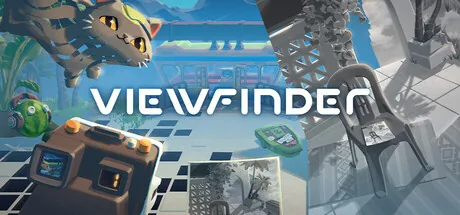
A puzzle game built around one genuinely brilliant idea — photographs you place in the world become the world, letting you reshape reality by swapping what a picture shows for what's actually there — undercut by a runtime and a script that its own fans agree don't live up to the mechanic carrying them.
Villa Gorilla's pinball-metroidvania hybrid won a BAFTA for Best Debut and sits at Overwhelmingly Positive on Steam eight years on -- a genuinely inventive idea that a small but consistent minority of players say the traversal design never quite lives up to, in a game its one-off studio never got the chance, or perhaps never wanted, to follow up.
A charming, ASMR-quality tidying puzzle game whose satisfying sorting mechanics draw near-universal praise, tempered by a persistent gap between its cozy, freeform marketing and puzzles that often demand one specific solution, plus a real, unaddressed colour-blind accessibility gap.
A co-op game about walking and talking with friends, from the Untitled Goose Game studio — shipped two days ago without a separate voice volume slider, so half its reviews are the same polite request written 1,400 different ways.
A NZ$7.39 first-person clicker that spends most of its three-to-six-hour runtime pretending to be a joke about number-go-down before revealing a real escape-room puzzle structure — checked against a 442-review corpus and achievement data showing only about one buyer in nine ever reaches the end.
A gorgeous hexagonal tile-placement puzzle that its own devoted players can't agree is actually relaxing — some call it genuine anxiety relief, others a hardcore puzzle in a cozy disguise — with a lack of tools to recover from bad luck as the most consistent complaint, and a smaller but genuine controversy over the developer promoting their next game inside it.
A genuinely inventive Tetris-meets-deckbuilding roguelike whose meta-progression system fits, almost too neatly, the exact design trap this outlet has flagged before in randomised builders — more unlocked content without more ways to steer around it, making runs feel less focused rather than richer the longer a player sticks with it.
A 1997 hacker fantasy where you write assembly to keep a disease at bay — and where the puzzle is usually working around what the language deliberately can't do.