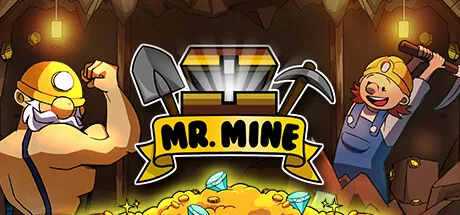
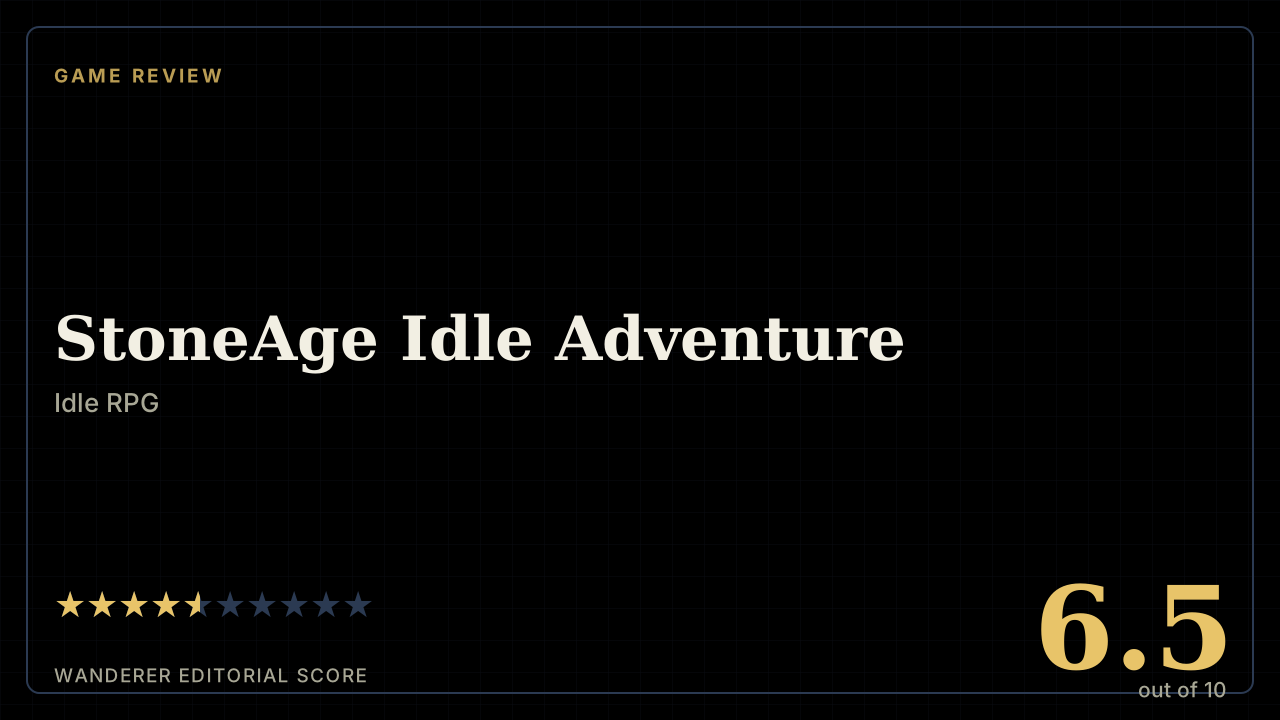
A free idle mining game about drilling straight down instead of resetting to start over — Playsaurus's other idle series trades Clicker Heroes' ascension loop for one continuous 2,500km descent. What that costs the game, and what its ticket economy actually sells.
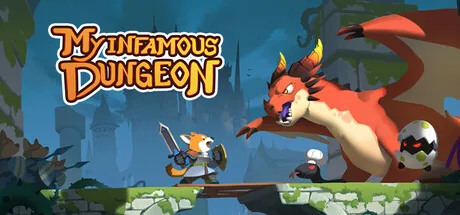
A villain's-eye dungeon builder that blends Dungeon Keeper's premise with Monster Train's engine-building satisfaction. Reviewers love the fantasy of arranging traps and breeding monster armies against invading heroes; the same reviewers, once they've found the game's strongest combination, say there isn't much reason to keep exploring after that.
A one-person incremental where you orbit a planet, drill it out from a laser turret, and work through four hazard-themed seasons to reach the core — a chill, cheap loop with a travel-time problem the developer never quite solves.
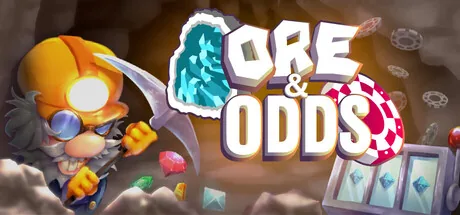
A NZ$7.99 mining incremental that puts a slot machine in the middle of its progression loop, then declines to say clearly what a bad spin actually costs you — a genuinely interesting hook, undercut by how little the game or its early reception have yet proven about it.
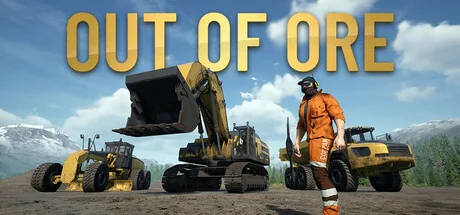
A genuinely satisfying Klondike gold-rush mining tycoon sim from a studio whose previous Early Access title was abandoned and delisted — a history that shadows this one every time a years-old bug resurfaces or a new paid DLC lands on what a chunk of the audience still calls beta.
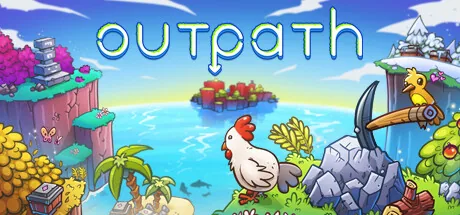
A satisfying first-island crafting loop that thins out badly afterwards — 93% positive lifetime, 80% across its last hundred reviews, and a free prologue that some players think is better designed than the paid game.
A free-to-play cozy MMO that survived its own studio nearly collapsing under it — Singularity 6 laid off around 40% of its staff across 2023 and 2024 before Daybreak Game Company bought the studio outright, and the game that emerged is still being patched roughly every three to four weeks in 2026. What it hasn't fixed is a monetisation model that increasingly charges real money to actually use rewards you already earned by playing.
A genuinely inventive Peggle-meets-roguelike hybrid whose own fans keep landing on the same specific complaint — the PC price doesn't yet match the amount of content on offer, and the identical mobile version is consistently cited as the better deal.
A memory-match card grid wrapped around a genuine dungeon-crawling RPG — flip pairs to fight monsters, loot treasure and trigger traps, then take what survives back to a Guild hub to level a deck capped at eleven cards.
Frontier Developments' theme-park sequel launched into a genuinely well-documented content and feature regression from its predecessor — Steam Workshop removed, core PC1 content resold as DLC, a console-first UI — sitting Mostly Positive across more than 14,000 Steam reviews; this review can confirm, via a sustained year-and-a-half patch cadence through mid-2026, that Frontier did not abandon the game afterward, with a real, credited player-reported turnaround distinct from its rocky launch reputation.
A solo-developer Early Access roguelite deckbuilder that casts you as a corrupt politician climbing from community leader to world leader, with fast five-to-ten-minute campaigns, a satirical Bloc-management system and cross-run meta-progression — reviewed here on a genuinely tiny early sample, but every one of the reviews it does have recommends it.
A first-person ranch sim that spent a year in public demos before its Early Access launch, and it shows — the "done" list is unusually long for a day-one build. What isn't done yet is co-op, and the recommended specs ask for more GPU than a cozy farm game should need.
A beautiful, genuinely novel pirate sandbox whose reviews split almost entirely on one axis — whether you can tolerate its unrestricted PvP and the community built around it — plus a real, press-covered 2026 community-safety controversy worth knowing about before you buy.
A NZ$3.74 solo-scale mining clicker from Kitty Games — eight upgrade tiers, a New Game Plus prestige loop that unlocks passive buildings, an Endless Mode and combinable difficulty mods, all narrated by a snarky fox in a top hat — checked against its own store data and a six-review sample rather than played.
A co-op sky-island survival game that trades hunger bars and monsters for solar panels and delivery drones — charming and genuinely clever in its energy systems, but its progression runs out of new ideas long before the credits.
A pixel-art MMO built around reshuffling roguelite dungeons and a player-run overworld, launched into Early Access carrying the baggage of its previous life as an NFT game.
A survival game where you recruit tribespeople who keep working while you're logged out — a genuinely original idea, attached to a 1.0 launch so rough the developers published a public 90-day plan to fix it.
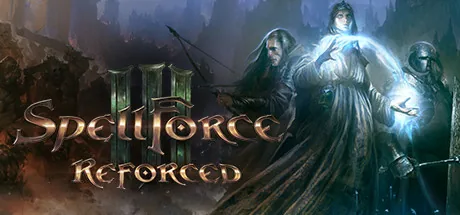
A fantasy RTS/RPG hybrid that launched genuinely buggy and unbalanced in 2017, briefly carried a real, documented tracking-software controversy, and was rebuilt into a noticeably better game by a free 2020 overhaul most reviewers now treat as the definitive way to play it.
The clearest case in this library of a Steam score that has become a historical document — a Mixed badge earned in 2023 sitting on top of a game that, three years and a flight update later, its current players mostly recommend.
An Americana-infused space trucking sim that launched without control remapping — locking out at least one player with a physical disability entirely — before a fast fix and nearly two years of steady, ongoing support. This review reads the whole arc, not just the rocky opening week.
Netmarble folds its 25-year-old dinosaur-taming franchise into an idle deck-builder, and the 24-unit battles are genuinely more tactical than the "auto-play RPG" label suggests — right up until the real-time PvP mode starts pricing in who's willing to spend.
A factory-automation game that puts the camera underground and gives you a gun that deletes stone, so verticality and terrain destruction do real design work instead of being a setting. The idea is stronger than the execution — a convoluted tech tree, a frame rate that sags under a big base, and a developer that's gone quiet since the 1.0 launch hold it back.
A genre mashup its own fans call an "uncut diamond" — Fallout-flavoured post-apocalyptic exploration, Darkest Dungeon-style combat and a real card-battler deckbuilding layer — whose lifetime review score is dragged down mostly by complaints from over a year before its actual 1.0 release.
A visually faithful Tolkien survival-crafting game whose negative sample is dominated by a genuine promise-versus-delivery gap — the store page promises resettling and restoring a thriving dwarven kingdom, but reviewers describe a mostly solitary escape through repetitive, procedurally generated tunnels that nobody ever comes to actually live in.